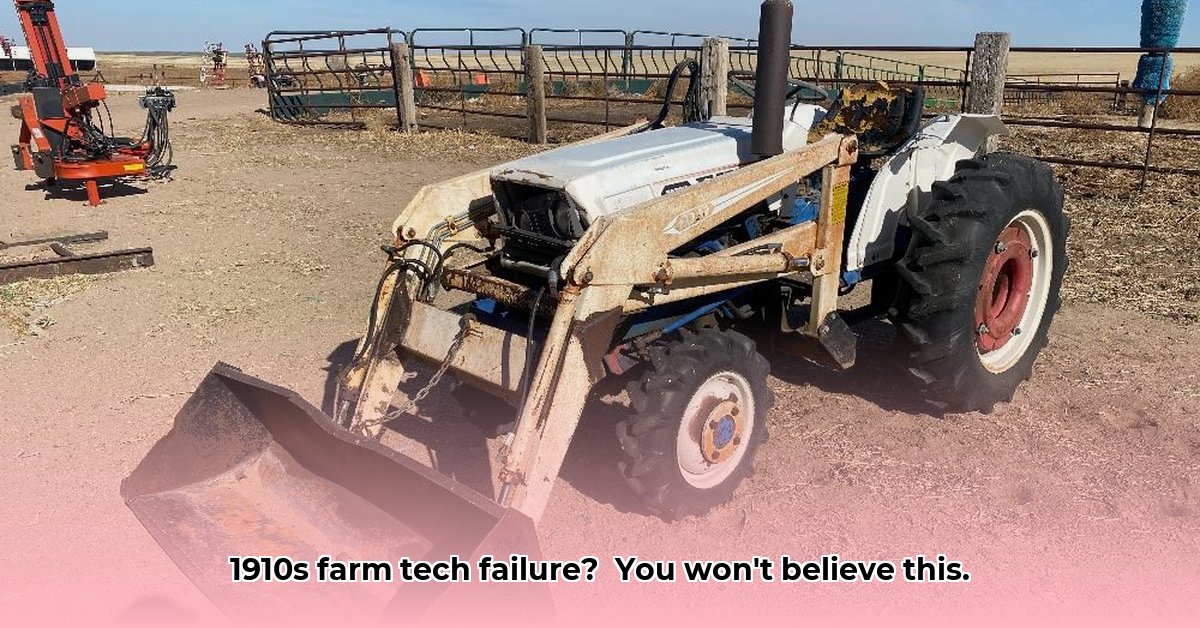
Bull Tractor: A 1910s AgTech Story of Boom and Bust
The dawn of the 20th century witnessed a seismic shift in agriculture. The horse, the longtime workhorse of the farm, was gradually being replaced by mechanized marvels. The Bull Tractor Company, recognizing this transformative moment, boldly entered the fray, convinced they possessed the key to the future: their innovative three-wheeled tractor, affectionately nicknamed the "Little Bull." This ingenious design promised farmers a more affordable and efficient solution for tilling their land. The burgeoning demand for food during World War I further fueled their initial success, with glowing early reports and enthusiastic testimonials filling the pages of the company's own publication, the Bull Tractor Bulletin. Yet, this early triumph masked a deeper, more insidious weakness that would ultimately lead to the company's downfall. Did the Bull Tractor simply lack the staying power to survive the emergence of a more formidable competitor? For more on early 20th-century tractors, see this site on early farm tractors.
The Wheels Came Off: Production and Competition
Beneath the veneer of early success, a significant challenge simmered: the Bull Tractor Company struggled to meet the surging demand for its product. Their production line, plagued by inefficiencies and organizational chaos, proved incapable of scaling to match the influx of orders. A pivotal contract with the prominent Canadian firm Massey-Harris crumbled due to precisely these production bottlenecks. This inability to scale represented a critical turning point, a fatal flaw that would ultimately seal the company's fate. Adding to their woes, Henry Ford's entry into the tractor market with his mass-produced Model F tractor delivered a devastating blow. Ford's colossal production capacity, bolstered by lucrative government contracts, quickly eclipsed the smaller Bull Tractor Company. The sheer scale of Ford's operation proved insurmountable, leaving the Bull Tractor Company struggling to compete in a rapidly evolving market.
What key factors hindered the Bull Tractor Company's ability to scale its operations? The answer lies in a combination of inadequate infrastructure, flawed management, and a lack of foresight in anticipating the competitive landscape.
Design Flaws and Marketing Hype
The Little Bull's distinctive three-wheeled design, while undeniably innovative, possessed inherent limitations. Its stability and maneuverability, especially on uneven terrain, proved less than ideal. Critics also pointed to the company’s overzealous marketing campaign, which some suggested exaggerated the tractor's capabilities. This perception of inflated promises, coupled with accounts of disgruntled farmers who felt cheated after experiencing the tractor's limitations, likely played a significant role in the company's eventual demise. Did a lack of thorough pre-launch testing contribute to the product's shortcomings and the company's subsequent failure? The available evidence strongly suggests this was a key factor.
What Went Wrong, and What Can We Learn?
The Bull Tractor Company's narrative serves as a compelling cautionary tale for modern agricultural technology businesses. What crucial lessons can we extract from their spectacular failure?
Lessons for Modern AgTech Companies:
Mastering Production: Before making grand promises, ensure the capacity to deliver. A robust and reliable production process is non-negotiable for long-term success. "A solid supply chain is the backbone of any successful AgTech venture," states Dr. Anya Sharma, Professor of Agricultural Economics at Cornell University. The importance of a well-managed supply chain cannot be overstated.
Rigorous Testing: Avoid the trap of rushing to market. Exhaustive testing under real-world conditions is paramount. Farmers demand dependable equipment; mere hype will not suffice. "Extensive field trials are essential for identifying and rectifying potential flaws before widespread distribution," confirms Mr. David Miller, CEO of AgriTech Solutions, Ltd. Thorough testing is an essential investment.
Ethical Marketing: Maintain transparency and realism in marketing materials. Exaggerated claims inevitably lead to customer disappointment and reputational damage. Building trust is crucial. "Word-of-mouth is more powerful than any advertising campaign," emphasizes Ms. Sarah Chen, Marketing Director at Global Harvest Inc. Positive reviews are invaluable.
Adaptability and Innovation: The AgTech field is constantly evolving. Companies must adapt their designs, strategies, and processes to changing market demands. Stagnation equates to failure. Collaboration is key – forge strategic alliances.
Competitive Awareness: Stay informed about competitors and their strategies. Understanding the competitive landscape is essential for strategic planning. Failing to anticipate the actions of established players, as Bull Tractor did, can be fatal.
Actionable Intelligence: A Framework for Success
The following framework outlines key strategies for AgTech success:
| Stakeholder Group | Short-Term (0-1 year) Actions | Long-Term (3-5 years) Strategy |
|---|---|---|
| AgTech Startups | Develop a Minimum Viable Product (MVP) and establish a resilient supply chain. Conduct thorough market research. | Invest in R&D, diversify product lines, and cultivate strategic partnerships with distributors and retailers. |
| AgTech Investors | Conduct rigorous due diligence, assessing production capacity, market analysis, and management expertise. | Diversify investment portfolios, focusing on innovative and sustainable solutions. |
| Researchers & Historians | Analyze historical data to gain insights into consumer behavior, marketing effectiveness, and technological constraints. | Conduct comprehensive research on evolving socio-economic conditions and their impact on agricultural technologies. |
How Did Supply Chain Issues Contribute to Bull Tractor Company Failure?
The early 20th century witnessed a surge in demand for agricultural machinery. The Bull Tractor Company, capitalizing on this need, introduced its innovative Big Bull model. Its self-steering capabilities and robust performance initially proved attractive to farmers, yielding considerable early sales. However, cracks began to appear as production shortfalls and unreliable parts supply became increasingly apparent. This was a pivotal factor in the company's decline.
The Cracks in the Foundation
The Bull's success proved short-lived due to systemic difficulties in manufacturing. The company struggled to secure reliable contracts with component suppliers, leading to chronic production bottlenecks. Farmers faced unacceptable delays, causing severe damage to the company’s reputation and ultimately contributing to their financial ruin. The company's failure to establish a robust, reliable supply chain became a crucial ingredient in its eventual collapse.
Beyond Production: Service and Support
Another critical factor in the Bull Tractor's downfall was its failure to provide adequate customer service and support. Despite initial customer satisfaction, farmers experienced significant delays in repair and parts acquisition. This dissatisfaction, coupled with supply chain issues, proved to be a double blow.
A Cautionary Tale: What Went Wrong?
The Bull Tractor Company's demise resulted from a multitude of interconnected factors. While their innovative design initially attracted customers, the company consistently failed to manage crucial aspects of their operations. Their story underscores the importance of holistic business management and a comprehensive approach to product development and customer support.
Key Takeaways:
- Manufacturing Capacity: Building strong manufacturing partnerships is crucial for reliable production. This ensures a steady supply of equipment and avoids delays.
- Financial Stability: Maintaining a sound financial base and consistent profitability are paramount for sustained growth and long-term survival.
- Customer Service: Prioritize customer service and support to build loyalty and maintain a positive reputation.
- Supply Chain Resilience: Flexibility and adaptability in the supply chain are key to overcoming unexpected disruptions.